The Essence of Life

The Essence of Life
Showing posts with label Hunting. Show all posts

Tuesday, February 20, 2024

Some Hunting & Shooting Quotes

Besides hunting and reading, I also enjoy watching classic movies, and once in a while I come across a dialogue or phrase that is relevant to both hunting and shooting. Here you will find four of those instances, and if you haven't watched these movies they are great entertainment.


Marilyn Monroe River of No Return 1 Wall Art, Canvas Prints, Framed Prints,  Wall Peels | Great Big Canvas

"What is important?

To hit the target.

When?

The first shot.

Why?

Because I might not get another."

Dialogue between Matt Calder (played by the laconic Robert Mitchum) and his son Mark Tommy Rettig) in the motion picture River of No Return (1954), just before they save Kay Weston (Marilyn Monroe) and her no good boyfriend Harry Weston (Rory Calhoun) from the rapids.

What do you think was in my mind when my family and I rafted down the Middle Fork of the Salmon River, a.k.a. River of No Return, last year? We didn't find their homestead, but stopped at Buckskin Bill's! But that is another story.


Watch The Snows of Kilimanjaro | Prime Video

"Oh, Harry, have you done any hunting lately?

No, why do you ask?

Too bad. A man should never lose his hand at hunting."

Dialogue between Uncle Bill (Leo G. Carroll) and Harry Street (Gregory Peck) in the motion picture The Snows of Kilimanjaro (1952), based on Ernest Hemingway's short story.


Amazon.com : Retro Tin Signs Cinema Poster Escanaba in da Moonlight Vintage  Art, Metal Poster, Wall Living Room Decor : Home & Kitchen

"Bring up your gun, put your finger on the trigger, and take a deep breath to steady your nerves..."

Just about every character say this to our beloved hero Reuben Soady (Jeff Daniels) in the classic Michigan's Upper Peninsula deer hunting movie Escanaba in da Moonlight (2001).

There are some many great one-liners in this movie that if probable deserves a post exclusively for them.


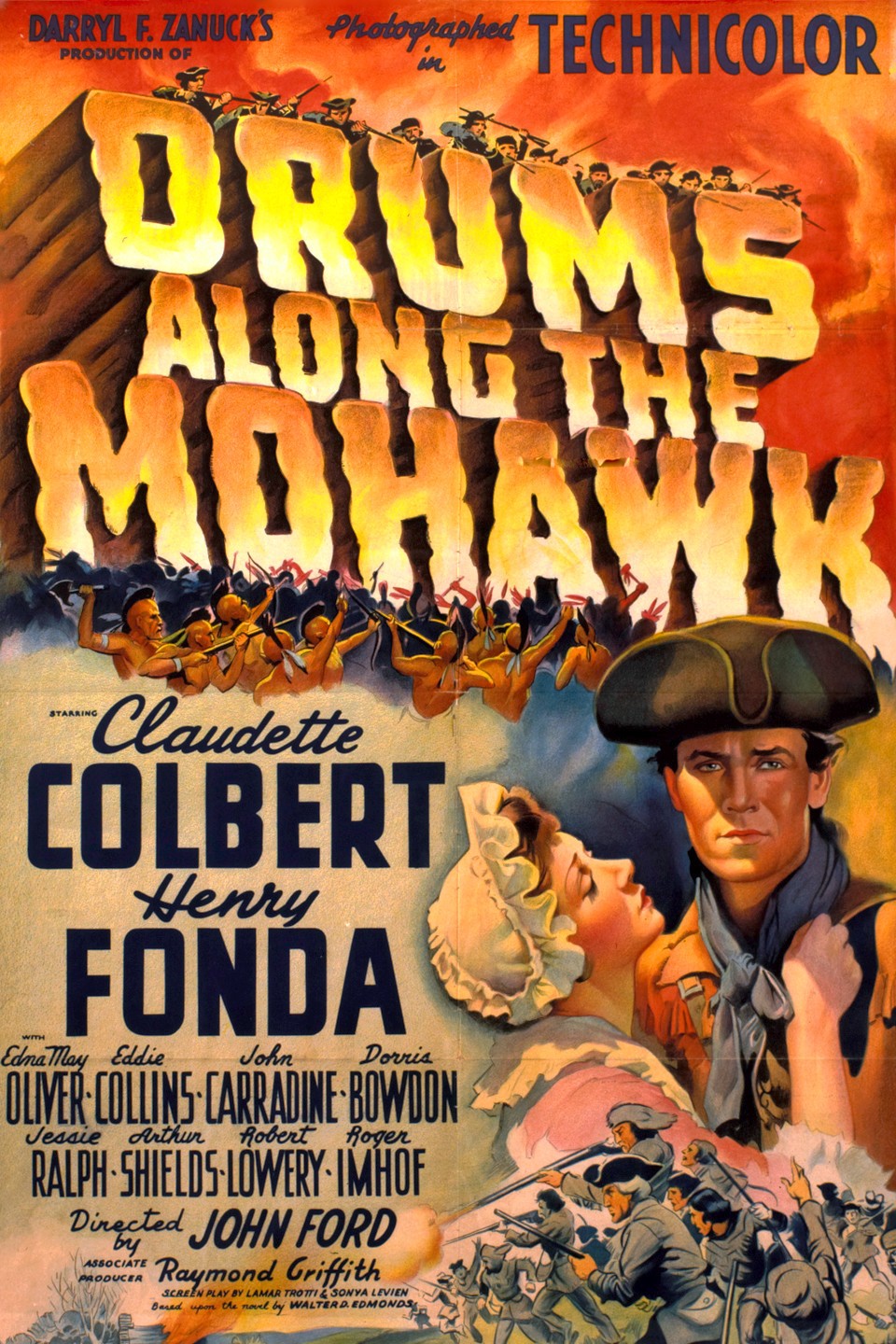
Drums Along the Mohawk | Rotten Tomatoes

"I'll never forget the first deer that I shot."

Brigadier General Nicholas Herkimer (Roger Inhof) on being told that his leg must be amputated when he bleeds to death during the surgery in Drums Along the Mohawk (1939).

Thursday, January 31, 2013

Maturity?

The grey ghost comes into the light

In my opinion the kudu (Tragelaphus strepsiceros) is the greatest of Africa's "plains game" trophies, and after reading Ernest Hemingway's "Green Hills of Africa" and Robert Ruark's "The Horn of the Hunter" the desire to hunt kudu took me to Africa on my first safari in 2005.

I got a beautiful Southern Cape Kudu during that safari, and I vividly remember each moment of that trip, especially when my kudu materialized from the bush into the lens of my scope.

Last year I had the opportunity to once again hunt in Africa, even if it was for a very brief  weekend. My friend Fanie Venter made arrangements to have me invited to hunt at Falmouth, a private bow hunting preserve in the Limpopo. The goal was to hunt an impala or warthog, and I already told you that story before (see "The Best Blind I Ever Hunted From").

While hunting at Falmouth I saw a great amount and variety of game, which just served to remind me why Africa is the most desired hunting destination in the world, and early in the afternoon I noticed that a large shadow fluctuated inside a mopane bush, a short distance from the property's only water hole.

I focused at that shadow and tried to be even quieter than I had been before, and then, suddenly, the shadow came out in the clear and became a marvelous kudu bull. What a magnificent site!

The kudu is a very shy animal, and he stood still a long time, not trusting the apparent peace of the water hole. After what could have been an eternity he started to approach, danced around and before he started drinking he lowered and raised his head three times, always ready to bolt away in case of any danger.

When he finally relaxed, if kudus ever do that, and started drinking the tepid water he presented a perfect broadside shot, and I had a knocked arrow at a range of eighteen yards!

I just had to draw my bow and release the arrow. But I did not do that.

Although fully grow in body size, this kudu was not yet a mature trophy. Its horns did not have that last curve that make them "point forward", and the ivory tip was just beginning to show in one side.

I admired that wonderful animal for a long time and never even raised my bow. I had no desire to just kill such a gorgeous animal before he could become an unforgettable trophy that would forever live in the hunter's memory.

Yes, I will hunt kudu again. I will pursue them with all my energy and soul, but I have no intention of pulling the trigger unless I have earned that right. Have I matured as a hunter?

Sunday, December 23, 2012

To Think About

Are we facing the gathering storm?

This week I received a signed copy of "Histórias do João Grande", by Carlos Henrique Menke, MD (ISBN 978-85-7497-578-8).The book brings a collection of chronicles written over almost fifty years by Doctor Menke, a passionate hunter, fisherman, conservationist, medical doctor and professor, and the background is the Brazilian state of Rio Grande do Sul.

In the 238 pages of this beautifully written book, Dr. Menke tells the sad story of how a vibrant nature friendly hunting culture was overthrown by a noise minority of Eco-radicals and how all legal hunting in a state that was once a reference in environmental stewardship, came to an end due to a court order. No discussion, no debate, just misguided emotions. But "Histórias do João Grande" is a lot mo than that. It is a vibrant book about the passion that burns deep inside of us hunters.

At its final chapter, Dr. Menke provides us with a gift in the form a quote from the renowned American economist, social theorist, political philosopher and writer Thomas Sowell: "Freedom means, in the end, the right of people to do things that we do not like."

As the year, but not the world, comes to an end, and it is already very clear that we will have  a very challenging 2013, we should ponder about freedom and the world we want to build and leave to our children.

May you all have a Christmas of renewal and rebirth and be the architects that build us all a better future.

Sunday, April 15, 2012

Pope on Hunting

Saxton Pope
Bow hunting is an art and a challenge. It took me 9 seasons to bag my first whitetail deer using bow and arrow (see my post “Appointment in Bangor” from October 2011), and along with the black bear that I also shot using bow and arrow in Ontario in August 2010 those are among the highlights of my hunting life.
While hunting with bow and arrow is clearly more challenging that with a firearms, I don’t think that this lessens the firearms hunter, especially since I do both. We need to be united as a hunting community, and cannot let ethics be confused with preferences (for an excellent article in this subject, click at the link http://www.huntright.org/where-we-stand/ethics-vs-preferences). We must keep in mind that united we stand, and if we brake our ranks we will fail and those that wanted to prohibit hunting and see men apart from nature will prevail.
But this is not the reason that I am writing about. On my last posting I talked about the “Love of the Chase”, and tried to articulate the reason of why I hunt, probably in a very clumsy way, but while reading Hunting with the Bow and Arrow” by Dr. Saxton Pope, one the fathers of modern archery, I came across a passage called THE PRINCIPLES OF HUNTING, that I reproduce below. I only wish I could write as well as Dr. Pope.
In the early dawn of life man took up weapons against the beasts about him. With club, ax, spear, knife, and sling he protected himself or sought his game. To strike at a distance, he devised the bow. With the implements of the chase he has won his way in the world.
Today there is no need to battle with the beasts of prey and little necessity to kill wild animals for food; but still the hunting instinct persists. The love of the chase still thrills us and all the misty past echoes with the hunter's call.
In the joy of hunting is intimately woven the love of the great outdoors. The beauty of woods, valleys, mountains, and skies feeds the soul of the sportsman where the quest of game only whets his appetite.
After all, it is not the killing that brings satisfaction; it is the contest of skill and cunning. The true hunter counts his achievement in proportion to the effort involved and the fairness of the sport.
Here we have a weapon of beauty and romance. He, who shoots with a bow, puts his life's energy into it. The force behind the flying shaft must be placed there by the archer. At the moment of greatest strain he must draw every sinew to the utmost; his hand must be steady; his nerves under absolute control; his eye keen and clear. In the hunt he pits his well-trained skill against the instinctive cunning of his quarry. By the most adroit cleverness, he must approach within striking distance, and when he speeds his low whispering shaft and strikes his game, he has won by the strength of arm and nerve. It is a noble sport.
However, not all temperaments are suited to archery. There must be something within the deeper memories of his inheritance to which the bow appeals. A mere passing fancy will not suffice to make him an archer. It is the unusual person who will overcome the early difficulties and persevere with the bow through love of it.
The real archer when he goes afield enters a land of subtle delight. The dew glistens on the leaves, the thrush sings in the bush, the soft wind blows, and all nature welcomes him as she has the hunter since the world began. With his bow in his hand, his arrows softly rustling in the quiver, a horn at his back, and a hound at his heels, what more can a man want in life?

Note: The book “Hunting with the Bow and Arrow”, as well as many other fantastic books, can be downloaded for free at several internet sources, including www.Amazon.com and Project Gutenberg (www.guntenberg.org).

Thursday, April 12, 2012

The Love of the Chase

Uruguay 2008 with Ariel
Over the years I have tried to answer the question of why I hunt using rational and scientific argumentation, talking about the negative impact of human development over nature, the virtual elimination of predators and other animals that compete with society’s scarce and disputed economic resources, and rationalizing that the only way to preserve a piece of nature or a little bit of wilderness is by extracting an “economic surplus” from them, and that only hunters, among all members of society, are willing to allocate the time and money to manage nature in such way.
However, as I began to dedicate more time to hunting and the outdoors I also tried to explore not only why I loved to hunt but why I had to hunt. Which compulsion would make me crave for autumn and winter and dislike summers or how could I explain to my wife that I am not trying to punish myself when I wake up long before first light and go out in inclement weather to hunt or worse yet why I spend more money on my Labrador retriever than on our children college fund?
After chasing it for many years, from when I hunted quail and shot fish in my childhood in Brazil to going on safari in Africa, I believe I finally found the answer to such pressing and profound question. It is still rational and scientific, but biological and philosophical instead of economical in its content.
I am not an anthropologist or a philosopher to write a treaty on human evolution or meditate on hunting, I am a hunter, and as a hunter I can say that deep in my genes and in my soul the predator lays, patiently waiting for opportunities to surface and strike upon its prey. I hunt because I am a predator. I am on the top of the food chain and as part of nature I must perform my ecologic function, occupy my niche, and feed on my prey.
Although detractors of hunting would like us to believe otherwise, Homo sapiens are as integral and important components of nature as any other creatures, and as we went through a similar evolution process as all those living creatures we evolved as the most successful predator this planned has ever had. Evolution shaped us not only physically but also emotionally and psychologically, and not even in our modern yet stupid time will misguided and ill-intentioned people be able to negate that.
Of course, it could be argued that humans being rational creatures should be able to control their most basic instincts, but by doing so we would only further remove ourselves from the natural world and then nature would play a constantly diminishing part of our life until by being ignored for so long it would be forgotten. And if nature becomes unimportant by being ignored and forgotten what can we expect that will become of it, a wasteland of shopping malls, golf courses and subdivisions or worse yet a dump yard for human rejects?
By castrating our instincts and not hunting we would not only deny ourselves the much needed vacation from our demanding lives and pressing (and some times depressing) routine, the human condition as mentioned by Ortega Y Gasset, vacations in which man can develop true happiness but also risk developing a total disregard for nature, a disregard that could have a most terrible outcomes, the end of all wilderness within human reach.
Hunters, more than any other group in human society, are responsible for conservation since we not only want to be able to hunt today but also in the future, and we want our children and their children to be able to have as close a communion with nature and we do. Hunters have a symbiotic relation with their prey, while hunting provides us nourishment for body and soul, we make our prey stronger by helping providing suitable habitat and maintaining the prey population within the habitat’s carrying capacity. Hunters interact with their prey year after year after year.
Because of this constant interaction between hunter and hunted, predator and prey, at one time I was afraid that the burning ember that keeps the predator alive deep inside us could be extinguished either by lack of fuel or by too much fuel but I no longer worry about that. Due to circumstances of life I had to spend many years without hunting. It was hard but I endured and Hemingway, Ruark, and other close friends kept the ember burning. On the other extreme I was exposed to Africa and not even its abundance of game could tame the predator inside me, for all the excitement of the chase was present again on the first opportunity, either shooting a pheasant over my dog or drawing my bowl at a whitetail doe.
The excitement and trill of the chase, the fulfillment that it gives us, reminds me that men are entitled basic rights, among them “the pursuit of happiness”. But, happiness is a state of mind, is doing what we like, pursuing what gives us pleasure. Happiness is in the action, not necessarily in the achievement. Ortega Y Gasset really captured the essence of men’s pursuit of happiness in saying that “the hunter does not hunt in order to kill; on the contrary, he kills in order to have hunted”.
And, since the happiness is found in the action, and the continuation of that action, not necessarily in the achievement, then, I hunt not only because I am a predator, but I hunt in order to be happy.